8. Afterwards
Miss Leila always felt that nobody really left the Community. She kept track as far as possible with former Caldecott children, was always ready to see them and dedicated a section of Meeting to announcements of their successes. Also at Meeting, Miss Dave, who seems to have kept the actual correspondence, gave a digest of news and letters received. It is true that some children, on leaving, disappeared into a black hole, and not all of the ex-Caldecott children’s subsequent activities were the sort of thing that could be decently mentioned at Meeting. Still, aftercare was an important part of the Community’s activities and, to the best of my knowledge, James King carried on the tradition and ensured that it continued after the reorganization of Caldecott as a Foundation. I have seen a few comments from people who felt they were more or less thrust into the wide world and left to get on with it, and from far back I remember a girl who had left the previous term returning to thank Miss Dave, dramatically in front of a full dining room, “for leaving me in the lurch”. I take it the Caldecott Association site is not for idealized memories only, so those who felt disappointed will find space here for their stories. Personally, I can only relate that I was a considerable beneficiary of Caldecott’s aftercare.
During my four years at Edinburgh, supported by a local council grant (this was before the student loans system was brought in), I was not financially in need, but I corresponded regularly with Betty Rayment who always showed great interest in what I was doing, and I still have a few letters from Miss Dave, written during her last year as Director and then speaking of the joys of retirement. She seemed concerned that I was not appreciating Edinburgh sufficiently as a city and hoped I would find time to admire the beauties of its architecture – “or is the Usher Hall your only port of call?”
Edinburgh University awarded me with a scholarship for a year’s study abroad but it was immediately obvious that the money would not cover the costs of living in Milan (or anywhere else on mainland Europe), which were at that time astronomical compared with the UK. Betty Rayment certainly did some pushing, but in concrete terms it was Mr. King who spoke to me directly and encouraged me to apply to the newly-instituted Leila Rendel Fund for help if necessary. This I was obliged to do, and with the help of a quite substantial loan I was able to stay on in Milan for a second year, by which time I had picked up enough work teaching piano and English to remain under my own steam. At the same time, I was given the possibility to pay back the money by giving an annual piano recital at Mersham le Hatch, at the end of which a retirement collection, after deducting the cost of refreshments for the invited audience, was set against my debt. These recitals were made possible by a lot of spadework on the part of Betty, who worked hard to create a constantly renewed and enlarged mailing list. From a fairly small attendance at the first recitals, an audience of over a hundred attended the last on 19th July 1987. This was Betty Rayment’s own last year at the Community and at the end of the recital, 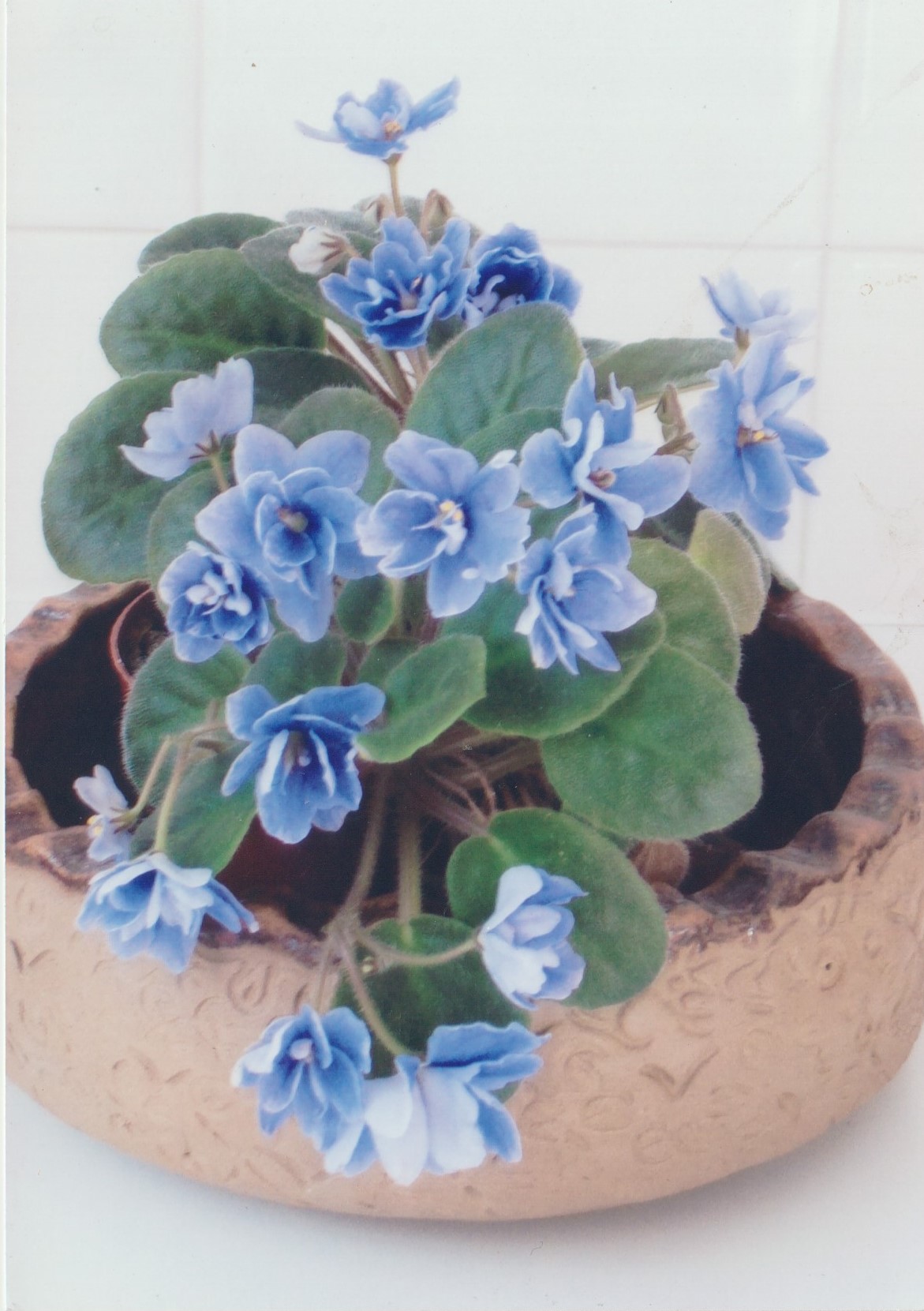 Mr. King thanked everyone for their contributions over the years and announced that my debt had now been fully paid off. I suspect this was a “white lie” and it had been resolved instead to write off whatever remained. This enabled Mr. King to tell me that he could not see the way to continue the recitals now that Betty was leaving. I felt disappointed at the time, but I think he was realistic. Any attempt to continue them, using the existing mailing list but without Betty’s extra input, would have fizzled out miserably. It was better to go out on a high.
I continued to visit Betty Rayment in Nottingham. She was always ready to welcome me and, from my marriage in 1986, my wife too. She was far from inactive in her retirement. She had several piano pupils and took part in chamber groups with local musicians. She also took up pottery. This, she explained, was a sort of insurance policy, so she would have something to do if she became too deaf or arthritic to continue with music. In reality, by the time she became unable to play any longer, the degenerative process had begun which obliged her to transfer to a care home, so the “insurance policy” was never used. In 2013 she sent me a photo of a pretty little pot she had made. My diary shows that I visited her  for the last time on 1st September 2017. By this time she was walking with a frame, was rather deaf and was becoming confused in her mind, but determined to be cheerful. We were able to take her for lunch at the Beeston Golf Club. After that, letters went unanswered, though I still wrote one every Christmas, hoping it might reach her. I have learnt from an ex-Caldecott pupil living in Nottingham that she developed dementia and no longer recognized people, but remained calm and cheerful in herself.
For my part, these were occasions to catch up on what I had been doing and also to hear Caldecott news, for which I relied on Betty until I joined the Caldecott Association. I am aware of at least three cases where she was a pillar of strength to former Caldecott pupils who had considerable problems after leaving and found in Betty the moral support they had not found from Caldecott itself. Probably there were far more than three, and on a more casual basis many other ex-pupils came to see her, or corresponded with her, during these last years. She certainly left a legacy of warmth behind her.