5. Finally
Probably not finally. Conclusions are likely to differ every time I read this through.
Objectively, I entered one Caldecott and left another one. The Caldecott of 1961 was nearing the end of a period of stability. Staff were still going strong who had been there since before the War or, at the very least, since the move to Mersham le Hatch. Apart from Miss Leila and Miss Dave, there were Miss E, Miss Travers, Miss Elizabeth, Miss Ruhl, Miss Hill, Miss Diana, Mr. Gladstone and Major Clark. Even before Miss Leila died, all of these except Miss Diana and Major Clark had retired. By the time I left, Miss Dave was holding on, otherwise only these last two, plus Betty Rayment and Mr. Draper of the 1950s intake, had been there longer than I had. Even Mr. King had arrived during my first term. What had been a rather fascinating time warp until about 1966, was looking shaky by 1971. The new staff intake viewed it all with a certain amazement. Some ran for cover after a term or so, some offered independent, uncoordinated attempts to improve things, some were happy to undermine the status quo. The more qualified arrivals often aimed for no more than a year or two’s work experience before moving on. The Caldecott Community, from 1971 to its reinvention in 1997 as the Caldecott Foundation, needs a latter-day Miss Elizabeth to tell the story of those years. As yet, the Association site has very little about that last decade and a half.
Was it just a matter of changing personnel? Maybe not. Miss Leila stated that, if one definition could cover the children for whom she was providing care, it was “those deprived of a safe home”*. She recognized that “For the deprived child there is no adequate substitute for what he has lost, and it is useless to camouflage either a children’s community or a foster-home as a ‘home from home’. It is rare for an older child to find satisfactory parent substitutes and any attempt to supplant his parents breeds sub-conscious distrust or confusion”. … “Such children are often too deeply loyal to their own relations or too deeply hurt by them to accept any home substitute but they gain relative happiness and a sense of security in a communal life and so learn eventually to trust and love the people who made it”. No imitation family groups, therefore. What Miss Leila could provide was security for the child whom circumstances had made insecure, stability for the unstable. She did this through what Miss Elizabeth, quoting in her turn Edith Wharton, called “the warm cocoon of habit”. The child knew that he or she had a regular place in the dormitory, that their customary place at the dinner table was waiting for them, that a bell would ring at a certain time to call them to dinner, to school, to bed, that certain things such as Chapel, housework, rest and reading took place a specific times. By these means, she could mend a child’s insecurity or instability. It could have been a stultifying routine, almost worse than the original problem, if Miss Leila had not also believed that “the personality and emotional ‘make up’ of each individual must be taken into account. There is no such being as the ‘simple child’. Every child is unknown country …” Hence her tireless search for whatever would bring out the special talent of each child, and define that child’s future place in society. Furthermore, in her intentions, the child was, and would always remain, part of a Community, one to which the adult could turn in need.
Miss Leila did not see herself as running a therapeutic institution. Miss Elizabeth has described her obsession with Gordonstoun as the ultimate model for a boarding school. Miss Leila was on the Board of Directors of Gordonstoun and Miss Elizabeth has recorded her own frustration, and that of Miss Dave, at Miss Leila’s desire that Caldecott should become a second Gordonstoun. The intake, as they logically saw it, was too different. Children arrived at Caldecott because they had been, in one way or another, “deprived of a safe home”. This must have been true of very few of the children sent to Gordonstoun, whatever the tabloid press may like to claim about the family of one particularly famous attendee during those years. Miss Leila did not see this as a problem. Children from troubled backgrounds would be given the opportunity to take part in “normal” boarding school life, with the added humanity of the community spirit, so the troubled child would go out into the world an untroubled adult, insofar as such a thing exists. A select few Caldecott children were actually sent on to Gordonstoun, including a slightly older contemporary of mine. I think he may have been the last**. Nobody could achieve total success with every child, but Miss Leila managed it with a good many. The extent to which she was successful can be measured by the fact that very many former Caldecott children from the 1940s, 1950s and early 1960s speak of their experience openly, with pride, warmth and gratitude. Just as nobody need “hide” the fact that he went to Gordonstoun, by and large, people who attended Caldecott in those years see nothing to be ashamed of. They do not see themselves as having been “in care”, in a “children’s community”, categories for which the GDPR allows the right to be forgotten. There are, on the other hand, children of a slightly later Caldecott who do not wish their offspring to know they had ever been there.
For the intake was changing. Eustace Hevers was a charming little boy when deflating vain young ladies with talk about pink-striped handkerchiefs, but he later revealed pyromaniac tendencies. His attempts were detected in time on Caldecott territory, but his firing of a local farmer’s barn full of hay must have cost Caldecott a pretty penny in compensation. Miss Leila’s last years were blighted, to her intense shame, by the village shop’s complete ban on Caldecott children. Zachary Durban was a fundamentally friendly, companionable boy, and an intelligent one, but he had rebellion in his blood. If a rule was there, it was to be broken. Punishments were for him a sort of martyrdom, an urge to commit greater offences in exchange for greater punishments. It is difficult to see where this course could end if not in prison. After his expulsion from Ashford Grammar School, Caldecott could contain him no more. I do not know what happened then. It does seem a pity that such resilience and perseverance could not be harnessed to the common good and I hope for his sake it eventually was. If so, I am not sure whether any credit is due to Caldecott. The trouble is, from the end of the 60s, Caldecott was getting more and more Zachary Durbans and fewer and fewer Barry Northams or Gerald Morans, and local authorities expected it to cope with them.
In what I am inclined to call the “first Caldecott”, Miss Leila was fortunate, for the most part, in her staff. The willingness of a core group to dedicate their entire working lives to the Caldecott Community gave added sense to her concept of security and stability. Moreover, it often meant that a former Caldecott child could maintain contacts and pay return visits over the coming years, and find the routine virtually as before and most of the staff still in place.
This could not last for ever. In the years preceding Miss Leila’s death, the system fast disintegrated as one longstanding staff member after another retired. In these last years, Mr. King told Miss Leila that he would have to implement a family grouping system. “If you have to you must”, she conceded, though it would surely have seemed a negation of her life’s work. I do not doubt that Mr. King believed in what he was doing, but even if he had not, current child psychology decreed that family groups were now the required pattern. Caldecott would have failed for lack of pupils if it had not made the change.
Since I was out of it by this time***, I will make only a few common sense observations. The idea of family groups sounds lovely when you imagine a nice, kind couple benevolently supervising a sweetly smiling, harmonious group of children carefully selected by age and gender to look something like a real family. It starts to look different if one or two of the children are there because their parents have had an acrimonious divorce, only to discover that their group leaders’ marriage is equally on the rocks. A home from home in the worst way. A child who has been mercilessly bullied by an elder sibling or at school, will not take much comfort in being bullied still worse by someone in his or her group. Children sometimes get the idea that their friends’ parents are better than their own and wish they could go and live with them. A reasonable child might be persuaded that you cannot change parents at whim and their own parents are doing their best. If a child does not like their group leaders or companions, why not create bedlam till they are moved to another group? Add to this a few cases of “wandering hands” or worse by staff members and a light dismissal of any related complaints. Mr. King had this to say about the 70s:
While the children's difficulties are to be expected, the staff's are not and are much more difficult to control. The liberated sexual lives at the Universities overflowed into the Community's off-duty private lives and created complicated role models for the children. At times this became much more of a burden than anything the children could possibly have produced****.
There were problems, then.
With all its faults, the “first Caldecott” invariably inspires affection. And yet … Anne Coningham-Naylor, who was at Caldecott from 1944 to 1953 and whose memories of the Nursery I have already quoted, had this to say towards the end of her life:
As a child, when I was sent, as many of us were, to an adult to talk over my problems, even as young as I was, I knew that they wouldn’t understand how I was feeling - “how can they when they are not me” is what I said to myself. I didn’t know myself and therefore didn’t know how to express my feelings in words, so I learnt to tell them what they wanted to hear, saying words that I’d heard adults use like ‘hate, ‘unloved’ ‘angry’ ‘sad‘ ‘nobody cares’ ‘you don’t understand’. … Nobody, that I can remember, ever asked me how I felt, or was I troubled or unhappy about it; and were my frightening episodes of sleepwalking, bad nightmares and bouts of uncontrollable anger, that trouble me even now when I’m sad, related. So I just learned to live with them.
… In one way we were shown there was more to life than just surviving and how it was possible to break away from the turmoil of the environment that brought us to the Community in the first place. I know that many children that I met many years later, as adults, were able to take advantage of this and change their lives for the good, but some never found their way out.
Was the Community at fault? Were there too many children with too many different needs, all trying to live together? Maybe the Caldecott was not flexible enough in its thinking about these different needs. Could more contact and involvement in working with a child’s home-life as a family unit have benefited some children? Perhaps some children were in the wrong place to help with their individual needs, but I believe Caldecott really wanted and thought they could help every child that came to the Community.
Miss Leila always said how sad she was that some children hadn’t stayed with the Community long enough for them to feel settled and ready to face the world outside with confidence and a belief in themselves.
The Caldecott was a unique experiment for its time, but was it the right approach? Now it seems that ideas are changing, as each decade passes and society wants to learn more about what children (and families) in a crisis need or don’t need. Have those that matter learned anything useful from the Caldecott Community experience?
Anne Coningham-Naylor’s memoir is available on the Association site and deserves to be read in its entirety. Its significance is that it would be difficult to find anyone more intimately bound up with the Community. Having been definitively abandoned by her mother, she was adopted by Miss Dave at the age of nine. She later worked at Caldecott. I do not think she was still on the staff when I arrived, but “Miss Anne”, as we knew her, was seen around from time to time. I remember her as an apparently very calm, rather reserved figure. Later still, she worked as archivist for the Association. In spite of all that, her final judgement on the treatment she received at the “first” Caldecott is ambivalent, more so than mine. A reading of her earlier story, however, shows that her initial problems in life were far greater than my own.
Glimpses of the later Caldecott, not enough to piece together a real history, can be found on the private Caldecott Community FaceBook. It is clear that many of these later attendees at Caldecott have mixed-to-bad memories, but have carried an affection for each other through life. So perhaps Miss Leila’s claim, at the beginning of the Charter, that “This household is a Community”, has proved true in a way after all. Curiously, the death of Betty Rayment became the occasion for me to reconnect, if only virtually, with the Community.
In my case, at least, I have to judge the Community positively. Thanks to Betty Rayment, my musical abilities were recognized and nurtured. Through the Leila Rendel Fund, I was also an exceptional beneficiary of the Community’s aftercare. Even without that, the Caldecott of Miss Leila, Miss Dave, Miss Elizabeth, Miss E and Mrs. Robson was an extraordinary place to be in. Knowing Miss Travers was certainly an experience and I would not forget Mrs. Abbey. With this backdrop, the staff with whom I hit it off less well, or with whom I had less to do, all contributed to the total experience. Though fleetingly mentioned here, my contemporaries taught me many things, good and bad - ultimately good because it was all experience. I hope these memories might unlock others from other people and even suggest a pattern for setting them down, though not necessarily at this length. And without sparing anyone, within legal limits, if the memories are bad, though I appreciate that in this case not everyone will want to live through it all again. I realized, as I wrote, that holding these memories within me has been like carrying unfinished business through most of my life. I shall be curious to see what it feels like, now I have set it all down on paper.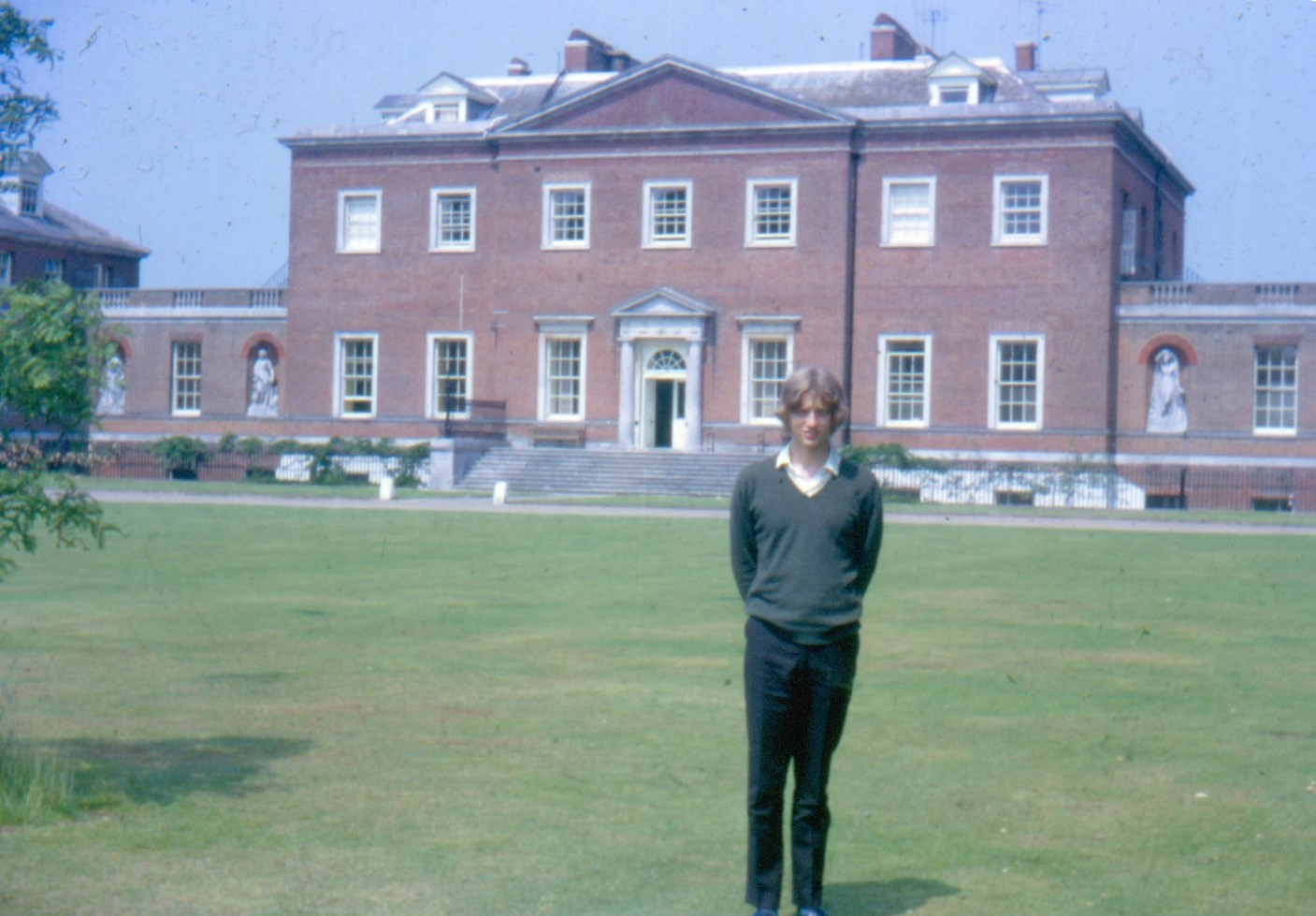
* All the following quotations are from Miss Leila’s 1952 paper “The Child of Misfortune”, which can be read in its entirety on the Association site.
** Gerald Moran informs me that a further Caldecott boy went to Gordonstoun in 1976.
***I was convinced that the family groups came into being after I had left and, I had supposed, after Miss Dave had retired. Gerald Moran has assured me that they were introduced in 1970 and therefore in operation during my last year. The Colt House was not affected so neither was I, directly. I must have been aware of it really, but it is a measure of the extent to which I inhabited an alternative musical Caldecott that I had completely forgotten. It is also interesting to note that the family groups began while Miss Dave was still Director, though I imagine the organization fell to Mr. King.
**** James King, A Father to the Fatherless. (Three decades at the Caldecott Community).